
Battlefield Tours: World War I and World War II
Period accommodation for those seeking to undertake DIY Battlefield Tours
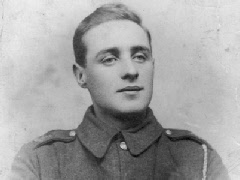 Granville Furnival. Died: April 18, 1917
WORLD WAR I. THE WESTERN FRONT. 1914 - 1918.
The sheer scale of the offensives between 1914 and 1918 make it almost impossible to list and detail all of them here - numerous books and internet sites are far better able to provide such information.. To this end, we have highlighted those areas upon which battlefield tours have traditionally focused.
We strongly recommend visiting the Commonwealth War Graves Commission website ahead of any visit.
The sheer scale of the offensives between 1914 and 1918 make it almost impossible to list and detail all of them here - numerous books and internet sites are far better able to provide such information.. To this end, we have highlighted those areas upon which battlefield tours have traditionally focused.
We strongly recommend visiting the Commonwealth War Graves Commission website ahead of any visit.
|
There are three notable period properties offering accommodation in the area. These are the Hotel Victor Hugo in Amiens, Chateau d’ Omiecourt between Amiens and Saint Quentin, and Le Macassar in Corbie. None of these are available to book online.
Alternatively, view all hotels available with Booking.com in and around Amiens. |
The Somme
The very name is synonymous with the horrors of trench warfare and an unbearable loss of life. What is commonly referred to as ‘The Battle of The Somme’ was a collection of military engagements within a geographical area containing towns such as Albert (which was behind Allied lines) and Bapaume and Peronne (both behind German lines). Beginning with the Battle of Albert on the 1st of July 1916, the Somme Offensive continued until the 18th November by which time there were an estimated 1.5 million casualties. Indeed, by the end of very first day alone it is said that around 20,000 British servicemen had been killed in action. The recently opened Thiepval Visitors Centre is located close to the ‘Memorial to the Missing’. See the wikipedia entry for The Battle of the Somme |
|
The Best Western Hotel L’Univers was once a Jesuit monastery in the 16th century, the Corne d'Or an 18th century mansion, while Hotel Diamant is a 17th century hotel on the Place d’Heros. Information on both can be found at the Booking.com entry for Arras.
|
Arras
The First Battle of Arras took place in early October of 1914, during which French troops successfully defended the town against the German Army - the latter going on to take Lens. The 2nd Battle of Arras took place from the 9th of April to the 16th of May 1917, during which the Canadians, Australians and British attacked German trenches located outside the town. The famous Battle of Vimy Ridge heralded the start of the offensive. Arras was heavily damaged - and thus largely reconstructed - during World War I. There are, however, some notable hotels with historic pedigree. See the wikipedia entry for The Battle of Arras |
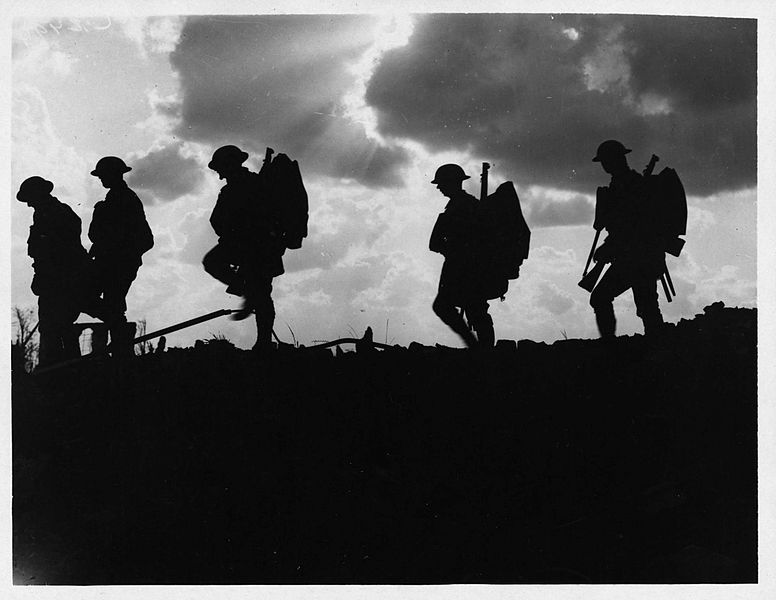
Battle of Broodseinde (Ernest Brooks)
|
Passchendaele and The Ypres Salient
The region around Ypres in West Flanders was the scene of major battles for almost the entire duration of World War I. Of these perhaps Passchendale (a small village) is the most well known, although this itself was only strictly the Third Battle of Ypres (June to November 1917). There are many places to visit in the area, including the ‘In Flanders Fields’ museum in the town itself, while the Sanctuary Wood Museum and Hooghe Crater Museum are both a few miles to the east. The Memorial Museum Passchendaele is approximately five miles to the north east of Ypres and is located close to the famous Tyne Cot cemetery. Military action throughout the area during the the Great War means that few historic buildings were left undamaged, and even fewer of these operate as accommodation premises (hotel, inn or otherwise) today. As such, those interested in staying in period hotels within easy reach of Ypres will find a good selection of such properties in Bruges - about 1 hour’s drive by car. For these we suggest visiting our Historic Hotels in Belgium section. Alternatively, Booking.com has a good range of hotels available to book online in and around Ypres (Ieper) itself. See the wikipedia entry for The Battle of Passchendaele |
|
Verdun
Some have suggested that to understand France in the twentieth century, one must first understand the legacy of Verdun - it was here in 1916 that as many as 250,00 were killed during one of the most bloody battles of the entire war. The Verdun Memorial is situated approximately 3 miles to the north of the city, and is positioned almost centrally to the original battlefield. There are two particularly notable period hotels within easy reach of the battlefield. These are Coq Hardi in Verdun itself, and the beautiful Chateau des Monthairons in Dieue sur Meuse. |
|
WORLD WAR II. D-DAY LANDINGS, NORMANDY, JUNE 1944
Operation Overlord took place on June 6th 1944. with US, UK, Canadian and Free French forces landing on five code-named grounds along the Normandy coast of France. It is certainly not for Nights in the Past to provide explicit historical detail of this momentous event - there are far more qualified online publications – but rather to supply the visitor with suggestions for heritage accommodation close to their desired destination. |
 Omaha Beach. US National Archives
Do-it-yourself battlefield tours are increasingly popular. However, anyone intending to do so without in-depth knowledge is strongly advised to consult reputable guidebooks or documents in order that they gain the best possible experience during their visit.
Utah Beach - US 4th Infantry Division. The east-facing coast of the Cotentin Peninsula is probably the least densely populated area associated with the D-Day landings. There are a few places to stay in and around Ste Mere Eglise, but most are relatively contemporary. Those seeking heritage hotels and inns close to the landing grounds of US troops will find a greater selection closer to the Omaha Beach region.
Omaha Beach - US 1st Infantry Division. Most options for period and historic places to stay are to be found in and around Bayeux. These include Hotel Le Lion d’Or (an eighteenth century coaching inn); Hotel du Luxembourg (a 17th century house located close to the centre of town); Le Tardif Noble Guesthouse, and Chateau de Bellefontaine. Information and reviews for all can be found at the Booking.com entry for Bayeaux.
Gold Beach - British 50th Infantry, 8th Armoured, 47th Royal Marine Commando. Like Omaha Beach, Gold is within easy reach of Bayeux (see above), while there are several non-historic accommodation options in Arromanches.
Juno Beach - Canadian 3rd Infantry, 2nd Armoured, 48th Royal Marine Commando. See options for Sword Beach, below.
Sword Beach - British 3rd Infantry Division, 41st Royal Marine Commando. The 2-star Hotel de la Plage at Ouistreham is an old villa near the beaches, while another option is Le Grand Hotel Cabourg across the River Orne - right on the sea front at Cabourg, this famous old building witnessed much of the D-day landings.
Utah Beach - US 4th Infantry Division. The east-facing coast of the Cotentin Peninsula is probably the least densely populated area associated with the D-Day landings. There are a few places to stay in and around Ste Mere Eglise, but most are relatively contemporary. Those seeking heritage hotels and inns close to the landing grounds of US troops will find a greater selection closer to the Omaha Beach region.
Omaha Beach - US 1st Infantry Division. Most options for period and historic places to stay are to be found in and around Bayeux. These include Hotel Le Lion d’Or (an eighteenth century coaching inn); Hotel du Luxembourg (a 17th century house located close to the centre of town); Le Tardif Noble Guesthouse, and Chateau de Bellefontaine. Information and reviews for all can be found at the Booking.com entry for Bayeaux.
Gold Beach - British 50th Infantry, 8th Armoured, 47th Royal Marine Commando. Like Omaha Beach, Gold is within easy reach of Bayeux (see above), while there are several non-historic accommodation options in Arromanches.
Juno Beach - Canadian 3rd Infantry, 2nd Armoured, 48th Royal Marine Commando. See options for Sword Beach, below.
Sword Beach - British 3rd Infantry Division, 41st Royal Marine Commando. The 2-star Hotel de la Plage at Ouistreham is an old villa near the beaches, while another option is Le Grand Hotel Cabourg across the River Orne - right on the sea front at Cabourg, this famous old building witnessed much of the D-day landings.